
Tampa International Airport
Using Passenger Research to Inform the Future Airport Experience
More than 3,000 in-person surveys gave airport leaders direct traveler data for planning shopping and dining ahead of major growth.

Hillsborough County Aviation Authority / Tampa International Airport
Public Sector
Aviation / Transportation / Government
Airport Leadership • Airport Planners • Concessionaires • Business Partners • Travelers • Aviation & Transportation Stakeholders
Paslay Group
Executive Summary
Tampa International Airport is one of the nation’s busiest airports, serving nearly 25 million passengers annually and connecting the Tampa Bay region to more than 100 nonstop destinations around the world. As the region continues to grow, TPA is preparing for significant increases in passenger volume, with long-term projections approaching 39 million annual passengers by 2042.
That growth is driving an ambitious capital improvement program highlighted by the development of Airside D, a new 16-gate terminal scheduled to open in 2028. As the Hillsborough County Aviation Authority planned for the airport’s physical expansion, it also needed to understand how the expectations and behaviors of future passengers should inform the evolution of TPA’s concessions program.
Working with Paslay Group, HCP Associates was engaged as the research partner to develop an evidence-based understanding of passenger shopping, dining and purchasing behavior. HCP designed and conducted a comprehensive passenger intercept study involving more than 3,000 in-person surveys throughout Tampa International Airport.
The research provided HCAA and its partners with a statistically confident view of passenger purchase behavior, brand expectations and unmet service needs across TPA’s diverse passenger population. Rather than relying on assumptions about what travelers might want from the airport of the future, the study provided direct passenger intelligence to help inform long-term concessions planning.
[CLIENT NAME]
[Title]
[Organization]
Understanding the Landscape
Tampa International Airport was planning for substantial long-term growth. TPA’s 2022 Master Plan Update projected annual passenger volume increasing from approximately 25 million to 34.6 million by 2037 and nearly 39 million by 2042. The plan revalidated the need for Airside D and identified additional terminal, baggage, parking and airfield improvements that may be necessary to accommodate future demand.
That growth presented a challenge extending beyond airport infrastructure. As HCAA planned facilities that would serve millions of additional travelers, it also needed to consider how the commercial passenger experience should evolve, particularly within dining, shopping and other concessions.
Airport passengers do not represent a single consumer profile. They include business and leisure travelers, local residents and visitors, families and individuals, frequent flyers and occasional travelers, each moving through the airport with different needs, expectations and purchasing behaviors.
HCAA and Paslay Group therefore needed more than anecdotal feedback. They needed research capable of reflecting TPA’s diverse passenger population and providing reliable intelligence that could help inform consequential, long-term concessions decisions.
Research
HCP developed a large-scale passenger intercept study designed to capture consumer behavior and preferences directly from travelers using Tampa International Airport.
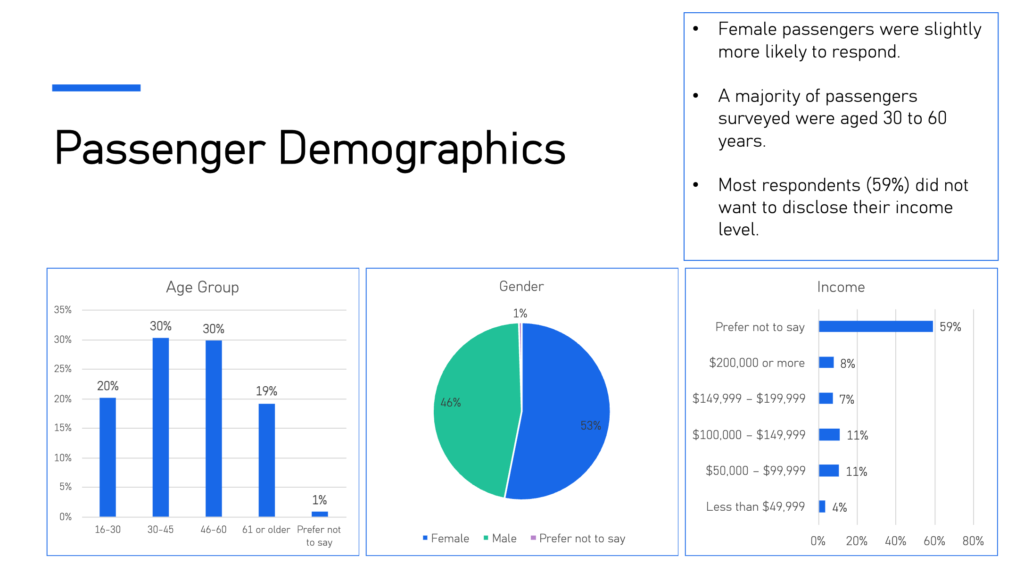
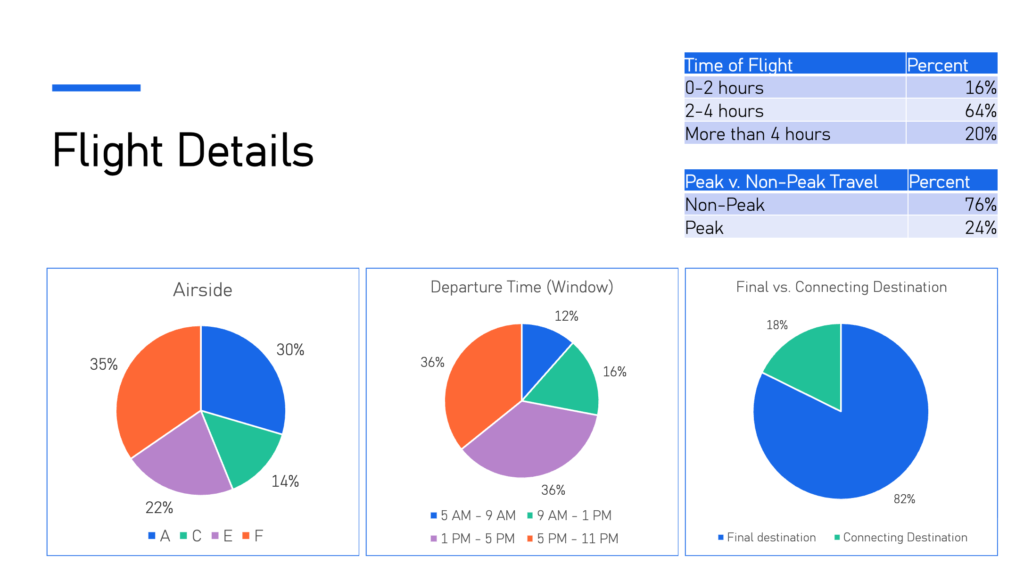
More than 3,000 face-to-face intercept surveys were conducted by trained survey administrators over an extended field period. The research incorporated quotas designed to ensure the completed sample reflected the population of travelers departing from TPA during a typical year, providing representation across the airport’s diverse passenger mix.
Conducting the research in person was important. Rather than relying on a general online panel or asking consumers to recall an airport experience after the fact, HCP gathered feedback from passengers within the environment being studied. The methodology allowed the research team to capture passenger perspectives while travelers were actively experiencing TPA and making decisions about how they spent their time and money within the airport.
The resulting dataset provided insight into purchase behavior, brand expectations, unmet service needs, and passenger preferences involving shopping and dining. By drawing from each segment of TPA’s passenger population, the study gave HCAA and its partners a statistically confident foundation for evaluating the future concessions experience.
Strategy
The strategic value of the research depended on connecting passenger feedback directly to the decisions HCAA and its partners needed to make.
HCP structured the study to move beyond broad measures of passenger satisfaction and focus on actionable consumer intelligence. Understanding what passengers purchased, what they expected to find, which experiences or services they valued and where needs remained unmet created a clearer picture of how TPA’s concessions environment could evolve alongside the airport itself.
The scale and composition of the sample were particularly important. With millions of passengers using TPA each year, conclusions drawn from a narrow segment of travelers could easily distort future planning. HCP’s quota-based approach was designed to provide a more representative view of the people actually departing from the airport.
The research ultimately gave HCAA and Paslay Group an evidence-based framework for evaluating future concessions opportunities, allowing passenger behavior and preferences to become part of the planning process rather than relying primarily on assumptions about the future traveler.
Impact
Conducted more than 3,000 in-person passenger intercept surveys throughout Tampa International Airport.
Deployed trained survey administrators over an extended field period within an active major-airport environment.
Used research quotas to develop a sample reflecting TPA’s diverse departing passenger population.
Provided statistically confident insight into passenger purchase behavior, brand expectations and unmet service needs.
Identified passenger preferences related to airport shopping and dining activities.
Provided HCAA and Paslay Group with actionable consumer intelligence to help inform future concessions planning.
Connected passenger research to a period of significant airport expansion and long-term passenger growth.
Created an evidence-based foundation for considering how the concessions experience can evolve as TPA prepares to serve millions of additional passengers.
What We Learned
Major infrastructure decisions are built around forecasts, capacity models, engineering requirements and long-term projections. But designing an airport experience also requires understanding the people who will ultimately use it.
For Tampa International Airport, the scale of future growth made that understanding particularly important. As HCAA planned for new facilities and millions of additional annual passengers, concessions decisions needed to reflect the behaviors and expectations of the travelers moving through the airport.
More than 3,000 conversations with passengers provided something projections alone could not: direct insight into what travelers wanted, how they behaved and where opportunities existed to improve the commercial airport experience.
The value of research is not simply in collecting information. It is in collecting the right information, from the right people, at the right time, so leaders can make better-informed decisions about what comes next.